Black Maternal Rates have spiked and continue to rise over time. When we sit down an look at the data it tells you alot. Majority of the highest rates of Black Mortality take place in the south. The place where we have the highest Black populations. Black maternal rates rising can stem from numerous things. According to Black Women Five Times More Likely to Die from Pregnancy-Related Cardiomyopathy, Blood Pressure Disorders Than White Women ,conditions such as preeclampsia/eclampsia were at the number one spot followed by cardicardiomyopathy, embolism, hemorrhage, and ectopic pregnancy are the leading factor for high black maternal death rates. Black Women's maternal mortality was 2.5 ties higher than any racial groups in the United States. This goes back deep in history when the "Father of modern gynecology," J.0 Marion Sims used Slave women to make contributions to the field of medicine.
Sims conducted numerous surgical experiments on enslaved women in the 19th century, primarily in Montgomery, Alabama, and later in New York City. These experiments aimed to develop new surgical techniques for repairing obstetric fistulas, a condition resulting from prolonged childbirth that causes urinary or fecal incontinence. Despite his medical advancements, Sims' methods were deeply unethical and exploitative. He subjected enslaved women to repeated surgeries without their consent, often without anesthesia, and in unsanitary conditions. These women endured immense pain, suffering, and long-term physical and psychological trauma as a result of Sims' experiments. This led to the sentiment or the idea that black people experience pain at a lesser rate than their white counterparts. This idea traveled and eventually medical readings pick up on this and would eventually teach this in their curriculum.

On the map right above, take a look at some of the states. This is just some data from the CDC about black women facing death after giving birth. Notice how the the Highest State with the highest Black maternal mortality is Mississippi and the state with the lowest is California. The southern region of the United states tends to have the highest number of pregnancy related deaths due to the discrimination that is still deeply rooted in the history of the people. Its legacy continue in to maedical practices, some which are prevalent today. Because of these practice Black women

For the future of black women, it important to shed light on the meddical world and what to consider when making these life changing decisions. Pregnancy is not something that is light. So much goes into planning

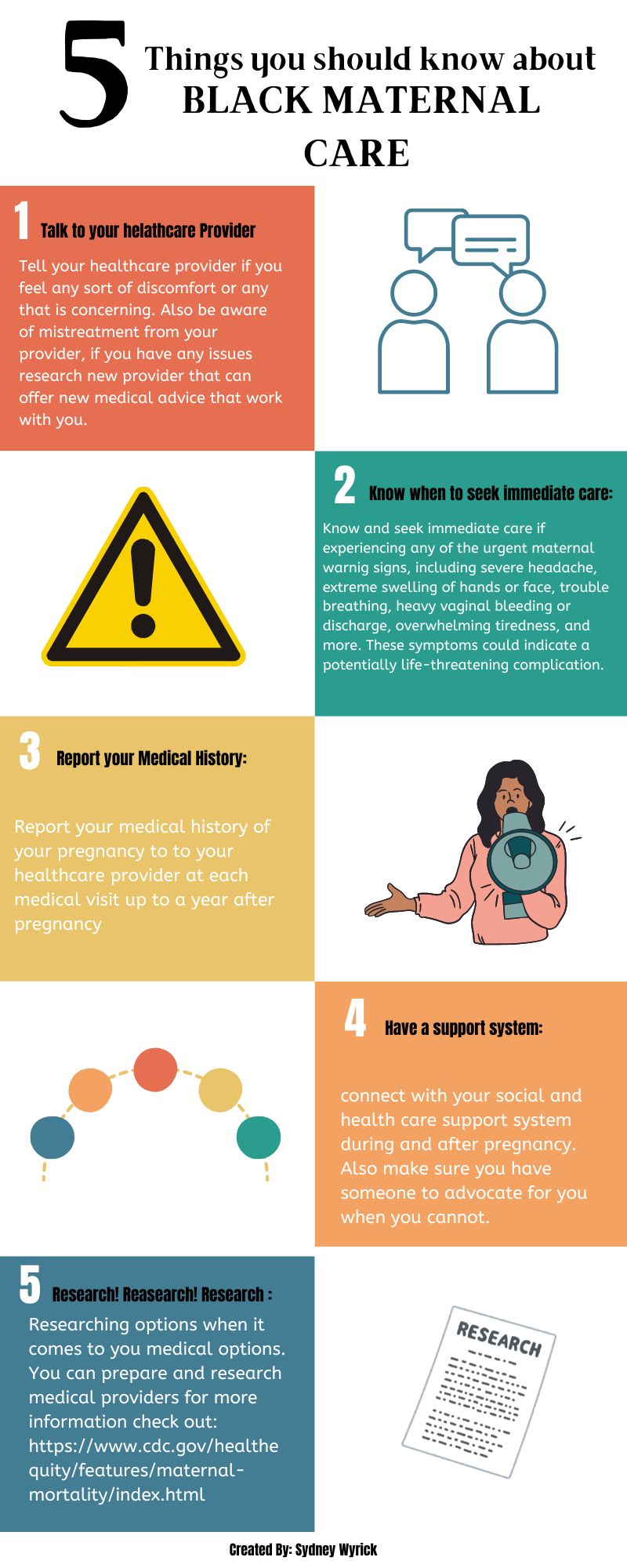
Pregnancy for black women is such a delicate topic. Here are some of the best tips provided by the Centers of Disease Control and Prevention, also know as the CDC. Here is just some of the best tips that they offered to the public. For black women, I wanted to make emphasis of the need of a support system during and after pregnancy. Black women are at more risk to have complications after pregnancy. There are even resources to help you find health care support too.
Total in Region:
<| Region | Rank | State | Population Black Alone | % Black | Black & Interracial | % Black and interracial |
|---|
Going forward, with that said, we need policy intervention of implementing policies that are aimed at dismantling systemic barriers and promoting equitable access to maternal healthcare. This includes expanding Medicaid coverage, increasing funding for community-based maternal health programs, and enforcing anti-discrimination laws in healthcare settings. It should also be mandatory for health care providers to undergo cultural competency training to recognize and address implicit biases that contribute to disparities in maternal health outcomes. Culturally sensitive care models that prioritize patient autonomy and dignity are crucial. We should also encourage empowering Black communities through education, advocacy, and grassroots initiatives is vital for fostering trust in the healthcare system and promoting maternal health awareness. Community-led programs that provide support networks, doula services, and mental health resources can help bridge gaps in care.
In conclusion, the Black maternal health crisis represents a critical public health issue that demands urgent attention and concerted action. By addressing the underlying factors contributing to disparities, promoting cultural humility in healthcare delivery, and empowering communities, we can work towards achieving maternal health equity and ensuring that every Black woman receives the care and support she deserves throughout her pregnancy and childbirth journey.